
How do you know whether your project is actually doing good? Gut feeling says yes — you recycled, you hired locally, the client smiled. Gut feeling also said yes to plenty of projects that left a mess behind them. What’s been missing is a measuring stick.
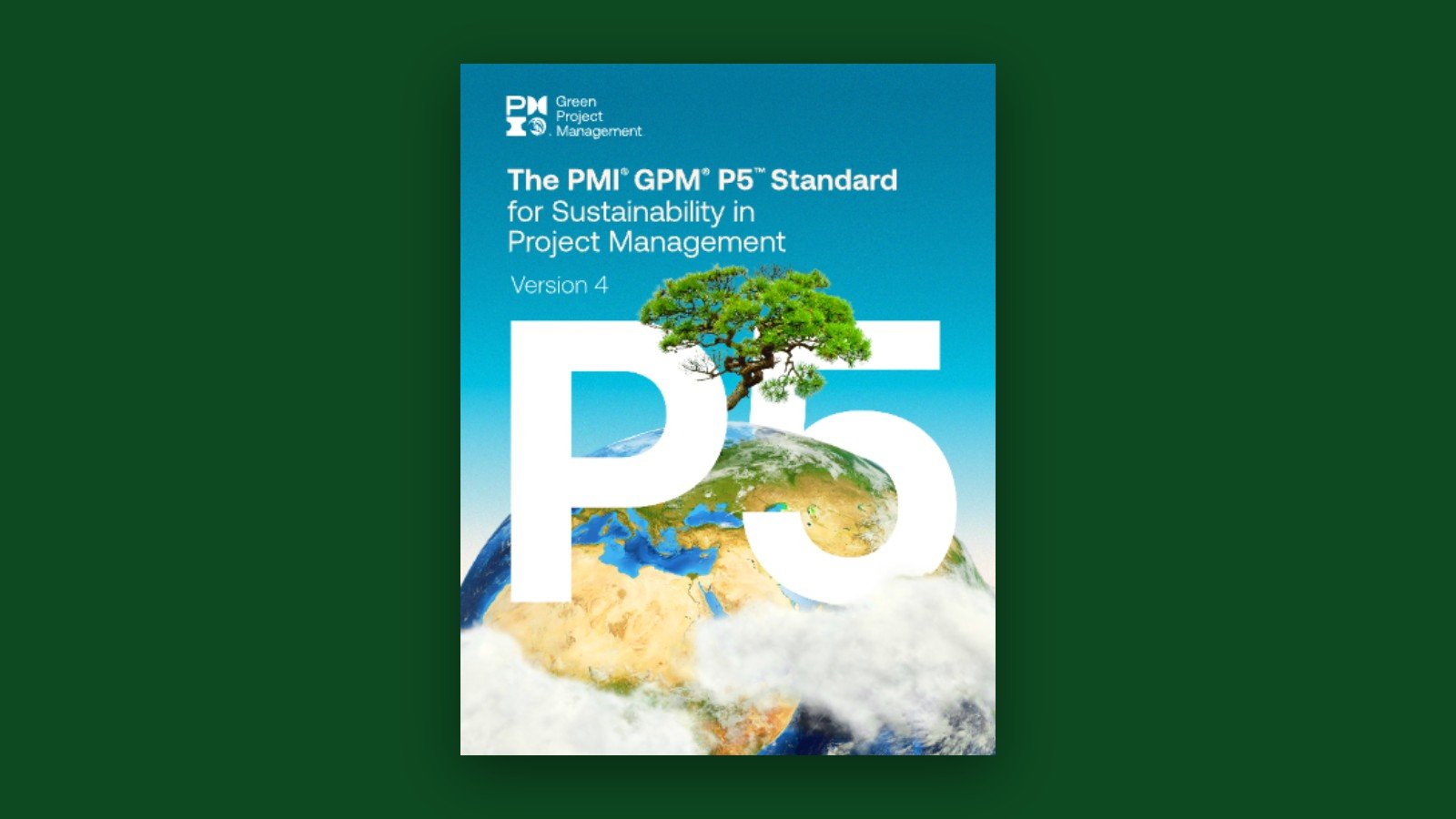
This is it. The P5™ Standard — written by GPM and PMI, the two big international bodies for project work, now in version 4 (2026) — is the ruler the rest of the field measures against. It costs nothing to read, and you can read it here.
Read the standard
The reader above holds the complete standard — turn the pages, or go fullscreen for a proper read.
The five Ps, in plain terms
P5 asks one question five ways: what does this project leave behind? For People — the workers, the neighbours, the community it touches. For the Planet — what it takes, what it wastes, what it puts back. For Prosperity — whether the money side holds up honestly, for more than just one party. And for the Process and the Product — the way the work is run, and the thing it hands over, long after the ribbon is cut.
Under those five headings sit 52 specific places where a project touches the world, each scored from 1 to 5. Two details make it hard to game. The “No Masking Rule” means a glowing score in one area cannot paper over real harm in another — planting trees does not buy back underpaid labour. And the scale runs past “doing less damage” through “repairing damage” to the top rung: leaving things measurably better than you found them. That top rung is where the word regeneration comes from — and where our name comes from, too.
Reading it is the start
The standard tells you what to measure. Its companion — the Practice Guide, which you can also read on our blog — shows you how to run the work day to day. And if you want to be able to prove you can apply both, that is exactly what the CSPP™ credential certifies and what our courses prepare you for. No project management background needed to begin.