
You want the thing you’re building — an event, a refurbishment, a community programme, a product launch — to do right by people and the planet. Saying so is easy. The hard part is Monday morning: what do you actually do differently when you plan the work, spend the money and pick the suppliers?
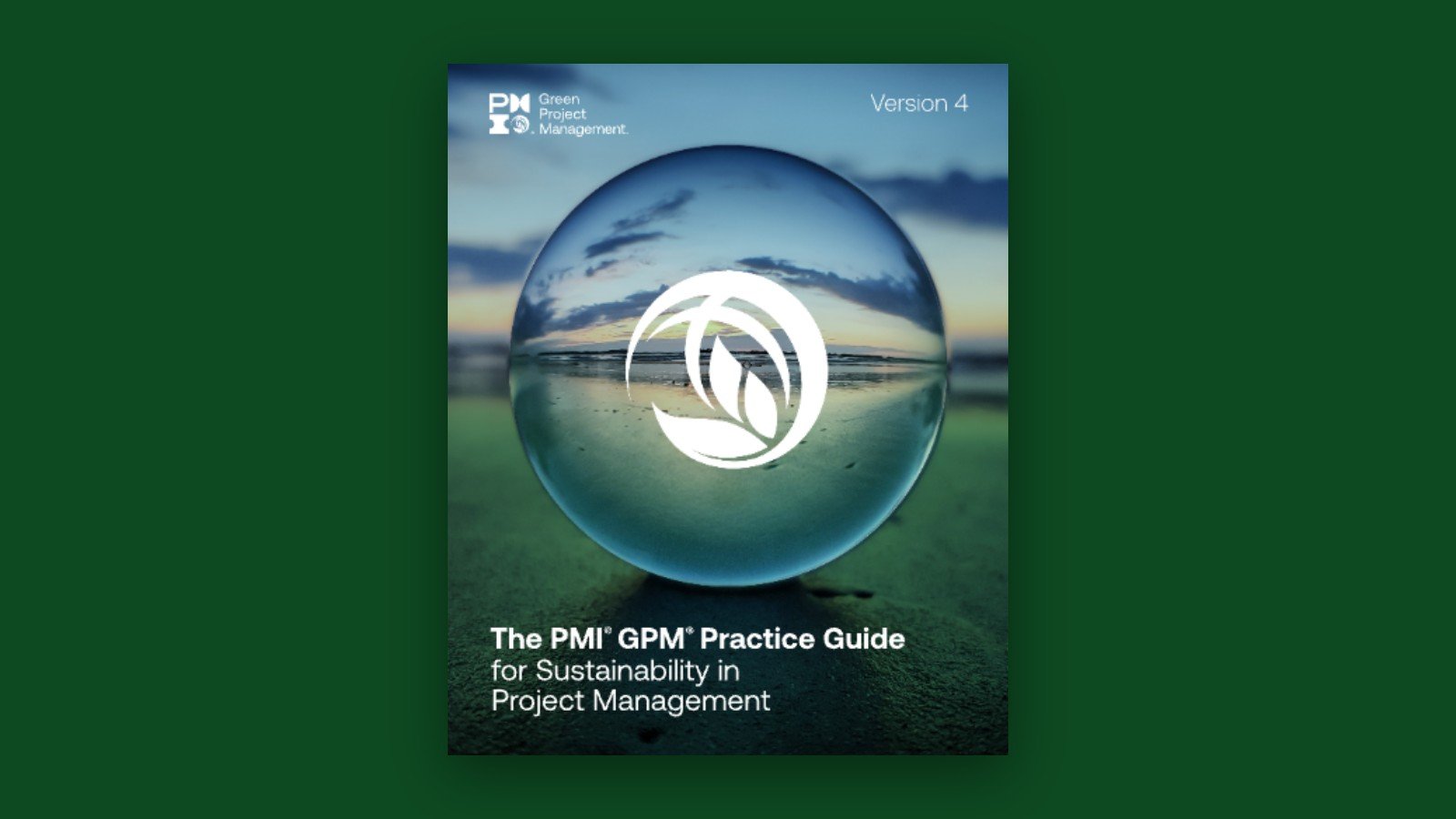
There is a book for exactly that question, and you can read it here in full. It’s called the Practice Guide for Sustainability in Project Management — written by GPM and PMI, the two big international bodies for project work, and now in its fourth edition (2026). It runs to 209 pages and costs nothing to read.
Read the guide
The reader above holds the complete guide. Turn the pages as you would a book, or tap the fullscreen control and settle in.
What’s inside, in plain terms
The guide answers four everyday questions. What does “sustainable” really mean when you run a project — beyond the poster on the wall? How do you carry it through a real piece of work, from first idea to final handover, in the plan, the budget, the hiring and the buying? Who keeps it honest — who decides, who checks, and how do you show the effort paid off? And how does your work line up with the rules and standards used around the world, so what you do in Dublin counts in Denver too?
The newest edition adds something refreshingly firm: tripwires. When a project’s effect on people or planet crosses a set line, someone senior has to act — it stops being a nice-to-have and becomes a rule of the road. There is also a 1-to-5 score for the 52 places where a project touches the world around it, so “doing better” becomes a number you can track rather than a feeling.
If you want to go further than reading
This guide is the foundation of everything we teach. On our courses you don’t just read the ideas — you practise them in a classroom and then on a real non-profit project through the Pro Bono Lab, and finish with a credential that proves it. No project management background needed to start.
Begin with the pages above. When you’re ready to make it official, explore the courses.